
A King, His Lap Dogs, and Our Kids
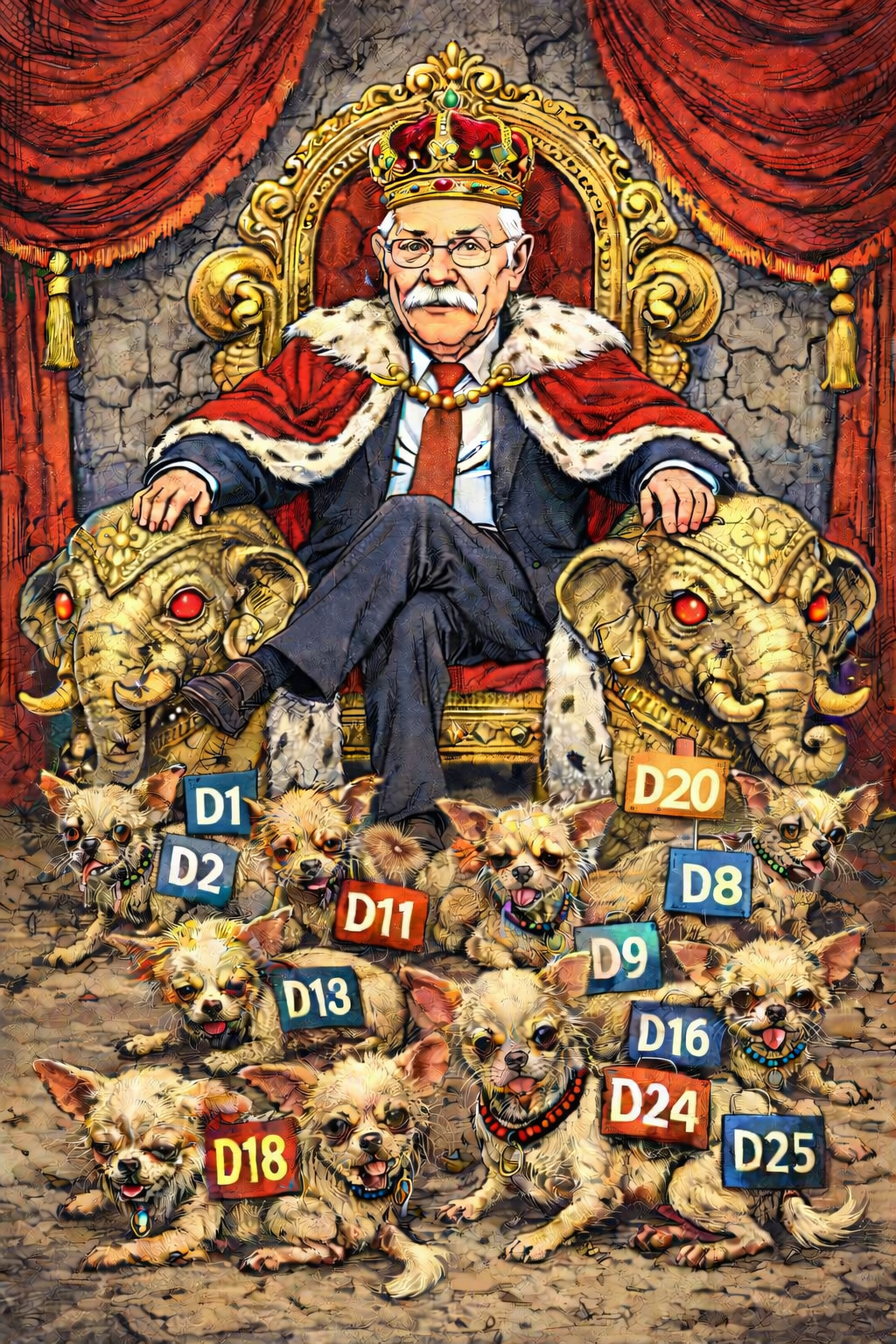
They Chose a Letter Over Our Children
I keep thinking about the simplest, most basic question that should have been impossible to dodge on January 20, 2026, when the Wilson County Commission met to fill the Zone 5 school board vacancy.
What did you hear from the public that made you believe Kevin Mack was the best caretaker of our kids’ future for the next seven months?
Not what you heard from a party. Not what you heard from a consultant. Not what you heard from a threat of a primary. Not what you heard from Facebook groups whipping themselves into a frenzy.
What you heard from the people. The parents. The teachers. The students. The taxpayers who fund the schools and the families who trust the schools.
Because that is the job. That is the whole job.
Instead, we got a night that felt less like a community trying to protect its children and more like a community being dared to pick a team jersey.
And in the end, thirteen commissioners voted to appoint Kevin Mack.
And I am disappointed. Not in the abstract. Not in some vague “politics is broken” way.
I am disappointed because the vote, and the rhetoric that pushed it, reads like a decision to choose politics over kids and their futures.
How We Got Here
This vacancy did not appear out of nowhere. Zone 5 opened because the prior board member resigned after being arrested and charged in an indecent exposure investigation. The county’s own public notice laid out the vacancy, the legal timeline, and the fact that the appointment was meant to bridge to the August 2026 election. The resignation and related criminal charges were widely reported across local news outlets.
So the assignment was clear.
Pick a steady hand. Pick someone who can keep the district stable. Pick someone who will show up, learn, listen, vote carefully, and get out of the way so the voters can decide in August.
That is what many people came to the microphone believing they were there to talk about.
But then the meeting happened.
Two Candidates, Two Arguments, One Commission
There were two main candidates discussed in the meeting and in public comments.
Larry Tomlinson framed his pitch around experience and continuity. He leaned on his years of prior public service and emphasized working relationships, safe schools, equal opportunity, and the idea that governing should require putting personal feelings aside and doing the public’s business. He also addressed the pressure campaign directly, saying commissioners had been put in a bad position by people warning of primaries if they did not vote for someone “with an R by their name,” and he called that bullying.
Kevin Mack framed his pitch around fiscal management and growth. He talked about budget experience, including city projects during his Mount Juliet tenure, economic development that grew sales tax revenues, running debt free in business, and what he called preserving Tennessee’s low tax heritage. He also spoke about career and technical education, STEM, and his teaching experience in advanced manufacturing and mechatronics. And he added that he holds socially conservative views, citing issues like right to life, the Second Amendment, transgender related policies, and library materials.
Those are the candidates’ statements.
Now here is where the meeting took a turn.
Because what flooded the room, again and again, was not a debate about students. It was a debate about partisan identity.
What Support for Tomlinson Sounded Like
People who spoke for Tomlinson generally made a caretaker argument.
A longtime Zone 5 resident said Tomlinson had been an outstanding school board member, understood the board’s purpose, supported public education, and could step in quickly for the limited term. Another speaker argued the commission should avoid appointing anyone who intended to run in August because incumbency tilts the playing field, and that voters should decide the long term seat in the booth.
A retired educator and former county commissioner urged the commission to reject partisan pressure and make the decision based on experience and proven track record, saying party labels did not belong in a local school board seat.
Others echoed the same themes: stability, character, proven leadership, and the idea that this appointment should be a temporary bridge until voters make the final call.
You do not have to agree with every word of that case to recognize the shape of it.
It was about the job. It was about continuity. It was about keeping the system steady for students, staff, and families.
What Support for Mack Sounded Like
Support for Mack leaned heavily on partisan math and culture war messaging.
Brad Lytle, identifying himself as the Wilson County Republican Party chair, told commissioners the partisan nature of the races “wasn’t me, it was the state legislature,” then listed party values and urged them to “put a Republican in the seat in zone five.” He framed the choice as honoring the last election’s vote totals and argued the results already answered what Zone 5 wanted.
Sophie Moore called Mack the most qualified and highlighted his résumé, including budgets, road projects, and the lack of city property tax in Mount Juliet. She praised him as one of the best mayors Mount Juliet has had and then pivoted to the idea that Zone 5 voters overwhelmingly want a Republican in the seat.
Terry Nicholson, a member of the Tennessee Republican Party board, similarly argued that partisan identification empowers voters and cited the share of Zone 5 voters who chose the Republican candidate in the most recent election, urging commissioners to appoint Mack.
Perry Neal supported Mack as a neighbor and said he voted Republican in the last Zone 5 election. He also said he had nothing negative to say about Tomlinson and called it a win win, while still endorsing Mack and urging unity after the vote.
Then there was Jason Moore, who took the microphone after Sophie Moore and did something different: he attacked Tomlinson as fiscally irresponsible, accusing him of blowing budgets, backing out of a sales tax agreement, overseeing expensive projects, and contributing to insurance shortfalls.
That is the Mack coalition as presented that night: the party chair, party officials, partisan election math, cultural wedge issues, and a prosecutorial attack on the other candidate’s spending record.
Now I want to say something plainly, because context matters.
I heard a lot about the letter next to a name. I heard a lot about primaries. I heard a lot about party power.
What I did not hear, from Mack or from the people pushing him the hardest, was a sustained focus on kids as kids.
Not students as props in an ideological fight.
Not children reduced to bathroom slogans.
Not families used as punctuation in a partisan press release.
I mean kids as living, breathing, specific human beings in Wilson County who need reading intervention, who need safe transportation, who need special education services that work, who need teachers who can afford to stay, who need classrooms that are not overcrowded, who need mental health supports that are real, who need career pathways that are funded, who need honest budgeting that does not blow up in December.
And that is the heartbreak of this meeting. The loudest pro Mack messaging was political. It was branding. It was the triumph of a team sport.
The Vote That Appointed Mack
The commission’s tally sheet shows the final vote.
Kevin Mack received 13 votes.
Larry Tomlinson received 9 votes.
One commissioner abstained.
Two were absent.
On the final vote, the commissioners who voted for Mack were: Robert Fields, Rick Brown, Bobby Franklin, Chad Barnard, Kevin Costley, Blake Hall, John Gentry, Jeremy Hobbs, Diane Weathers, Lauren Breeze, Glenn Denton, Danny Clark, and Justin Smith.
The commissioners who voted for Tomlinson were: Terry Scruggs, Haskell Evans, Tommy Jones, Chris Dowell, Rusty Keith, William Glover, Mike Kurtz, Wendell Marlowe, and Jeremy Reich.
Tyler Chandler abstained.
Jerry McFarland and Beth Bowman were absent.
That is not rumor. That is the recorded tally.
So here is my question, directly to the thirteen commissioners who voted for Mack.
My Request to the Thirteen
Please share what feedback and comments you received from the public that encouraged you to vote for Kevin Mack.
Not what you received from party leadership.
Not what you received from partisan activists.
Not what you received from threats about primaries.
I mean the substance.
What did Zone 5 families tell you they needed from this appointment between now and August?
What did teachers tell you they needed?
What did parents tell you they feared?
What did students, if any reached you, tell you they wanted their board to prioritize?
What was the actual child centered rationale that outweighed the caretaker case made for the alternative?
Because if the answer is “the voters chose Republican last time,” then please say that out loud.
Say plainly that the deciding factor was partisan loyalty.
And then explain to every parent in Zone 5 why that is acceptable when we are trying to recover trust after a vacancy born from scandal.
This Is Not a Game
We are talking about the institution that carries the weight of our community’s future.
Public schools are not an accessory to politics. They are the engine of opportunity.
They are where we decide, in practice not in slogans, whether we believe every child matters.
And I am not asking for perfection. I am asking for priorities.
If you can fill a room with passionate speeches about the letter next to someone’s name, but you cannot fill the same room with specific commitments to student outcomes, safety, staffing stability, and responsible governance, then you have made the point. Just not the point you think you made.
The Part That Still Matters
The good news is that this appointment is temporary. The county notice was clear that the seat ultimately goes back to the voters in August 2026.
So here is what comes next.
If the commission chose politics, then the public’s job is to choose accountability.
Ask harder questions.
Demand specifics.
Make every candidate, including Mack, answer for students as students. Not as abstractions. Not as culture war talking points.
Budgets. Class sizes. Facilities. Teacher retention. Special education compliance. Safety plans. Student supports. Academic recovery. Career pathways.
And yes, values matter. But values without governance are just performance.
So I will end where I started.
To the thirteen commissioners who voted for Mack, please share what you heard from the public that led you to that vote.
If your answer is strong, put it in the light.
If your answer is partisan, own it.
Either way, the public deserves to know.